|
Chipping Campden |
 |
|
|
Chipping Campden |
|
|
|||
 |
|||
 |
|||
|
The richest wool town in the Cotswolds |
|||||
 |
|||||
|
|||||
People often forget a letter P in this town's name. Remember, it's Chipping Campden, not Camden. Be careful with your consonants! |
|||||
The word "chipping" derives from an old English term for "market", and throughout its history the town has always been open for business. During the medieval era, when the wool trade was in full swing, this was one of the most important places in England. Its name was known all over Europe. This had a dramatic effect on the settlement, transforming it completely. |
|||||
A particularly noticeable product of those prosperous wool-trading years is St. James' Church. At the time, dozens of similar religious buildings were springing up all over the Cotswolds. St. James' though, is arguably the finest of them all. It's a spacious place, with a tall, 36-metre tower. Inside is a collection of appropriately ornate decorations, from tombs to altars. |
|||||
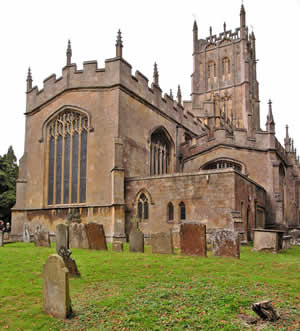 St James' Church Photo stevecadman |
|||||
This beautiful structure does justice to the rest of Chipping Campden. It's an eye-catching place, built from golden yellow Cotswold stone. On a summer's day it seems like sunlight is shining from the walls. Unusually, the High Street runs in a gentle curve. Its houses form a largely unbroken terrace, but the colours, shapes and styles tend to vary wildly. It's one of the more interesting, unique streets to exist in any small English town. |
|||||
The oldest property is Grevel House. It was built back in 1380, when its chimneys would still have been a rare sight! The home was named after William Grevel, an influential wool merchant who helped bring success to town. Watch out for the other interesting architectural details, like the gargoyles and sundial. |
|||||
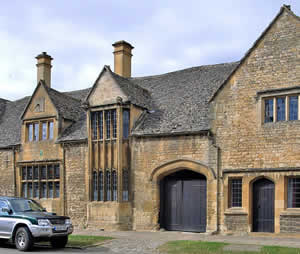 Grevel House Photo stevecadman |
|||||
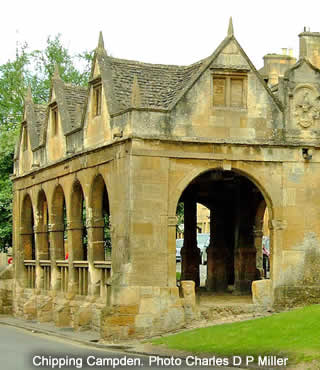
At the centre of the High Street is the 17th century Market Hall. Surprisingly enough, this is one structure that doesn't have a connection to the all-conquering wool trade. Instead, it housed vendors of cheese, butter and poultry. Its many arches perfectly frame views of the buildings outside. |
|||||
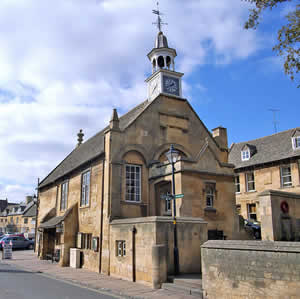 Chipping Campden Market Hall Photo stevecadman |
|||||
|
|||||
|
|||||
|
|||||
Chipping Campden Tourist Information The Old Police Station, High Street, Chipping Campden, GL55 6HB. Tel: 01386 841 206 |
|||||
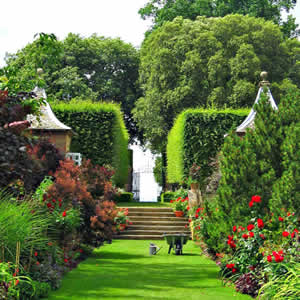
Hidcote Manor Garden (NT) is open mid March to early November, Saturday to Wednesday, 10am to 5pm. Entry costs around £10. Hidcote Bartrim, Chipping Campden, GL55 6LR. Tel: 01386 438 333 |
|||||
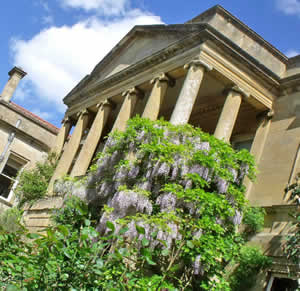
Kiftsgate Court Garden is open May to August, Saturday to Wednesday, 12noon to 6pm (plus reduced opening in April and September). Entry costs around £7. Near Chipping Campden, GL55 6LN. Tel: 01386 438 777 |
|||||
 |
|||||
|
Pocket Britain is optimised for use on a smartphone or tablet with internet access. All content is subject to copyright. All reasonable methods have been used to ensure information supplied is accurate at the time of publication. However, it is advisable to check information before relying on it. Privacy Policy |