|
Moreton in Marsh |
 |
|
|
Moreton in Marsh |
|
|
|||
 |
|||
 |
|||
|
A Cotswolds market town on an ancient Roman transport route |
|||||
    |
|||||
Listen to this article |
|||||
|
|||||
The Fosse Way was a Roman road spanning the 300 kilometres between Lincoln and Exeter. Its existence kick-started the development of many settlements along the way. One of these was Moreton-in-Marsh, in the Cotswolds. The Fosse Way still lies beneath the modern surface of the town's main road. |
|||||
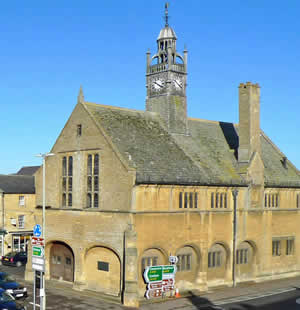 Redesdale Market Hall. Photo Mark Hogan |
|||||
Later, this was also a major stopping point on the stage coach route between London and Worcester. All in all, Moreton has been making its fortune from travellers and merchants for nearly 2000 years. Thanks to the constant traffic, the local shopkeepers did very well. Even today, the town still hosts the largest open air market in the entire Cotswolds. Every Tuesday, around 200 stallholders gather to tout their wares. |
|||||
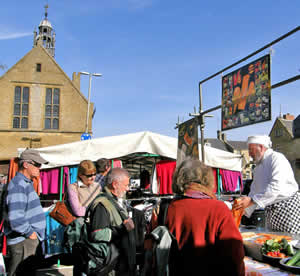 A market in Moreton in Marsh. Photo Sue H J Hasker |
|||||
During the rest of the week, the shopping scene is a little more subdued. Most stores are small independent places, selling souvenirs or antiques. In fact, many of the buildings are antiques themselves. Most were built during the 17th and 18th centuries, when the wool and cloth industries were booming. The town is also home to plenty of coaching inns, with long histories of their own. The White Hart Royal is probably the most famous, as it hosted King Charles I during the Civil War. Back then, the bells of the Curfew Tower rang out a nightly signal, to warn people of the risk of fire. This ended in 1860, but the tower still offers a visual reminder. |
|||||
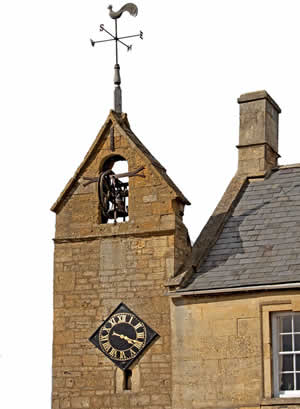 Curfew Tower. Photo Tony Hisgett |
|||||
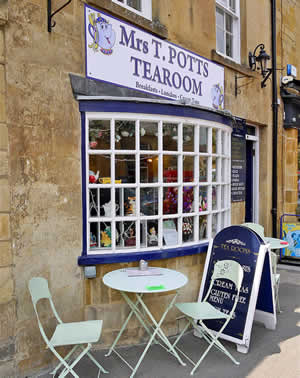 A local Tea Room. Photo mick / Lumix |
|||||
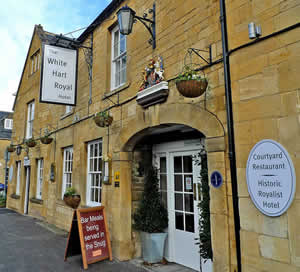 Historic Royalist Hotel. Photo Mark Hogan |
|||||
Moreton-in-Marsh's name supposedly refers to the marshland that used to exist here. This makes sense, but there is another possibility. The title could have derived from the word "march", meaning border or boundary. Once upon a time, Moreton was the meeting point of four different counties. Nowadays that spot is a short walk away. It's marked by the Four Shires Stone, which touches the edges of Gloucestershire, Warwickshire, Worcestershire and Oxfordshire. |
|||||
|
|||||
|
|||||
|
|||||
|
|||||
Moreton in Marsh Tourist Information High Street, Moreton in Marsh, GL56 0AZ. Tel: 01608 650 881 |
|||||
Wellington Aviation Museum is open Tuesday to Sunday from 10am to 5pm (closed for lunch). Entry costs around £2 for adults and children. British School House, Broadway Road, Moreton-in-Marsh, Gloucestershire, GL56 0BG. Tel: 01608 650 323 |
|||||
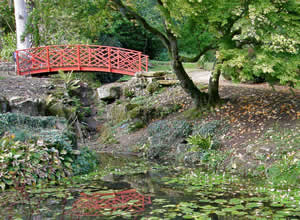
Batsford Arboretum is open daily from 9am to 6pm (4pm in December and January). Entry costs around £7. Batsford park, Gloucestershire GL56 9AB. Tel: 01386 701 441 |
|||||
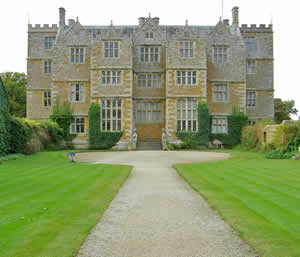
Chastleton House (NT) is open April to November, Wednesday to Saturday, 1pm to 5pm. Entry costs around £10. Batsford park, Chastleton, near Moreton-in-Marsh, GL56 0SU. Tel: 01608 674 981 |
|||||
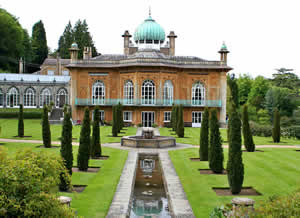
Sezincote Manor is open January to November (House May to September) on Thursday, Friday and Bank Holiday Mondays, 10am to 5.30pm. Entry costs around £10 (gardens only £5). Near Moreton in Marsh, GL56 9AW. Tel: 01386 700 444 |
|||||
 |
|||||
|
Pocket Britain is optimised for use on a smartphone or tablet with internet access. All content is subject to copyright. All reasonable methods have been used to ensure information supplied is accurate at the time of publication. However, it is advisable to check information before relying on it. Privacy Policy |